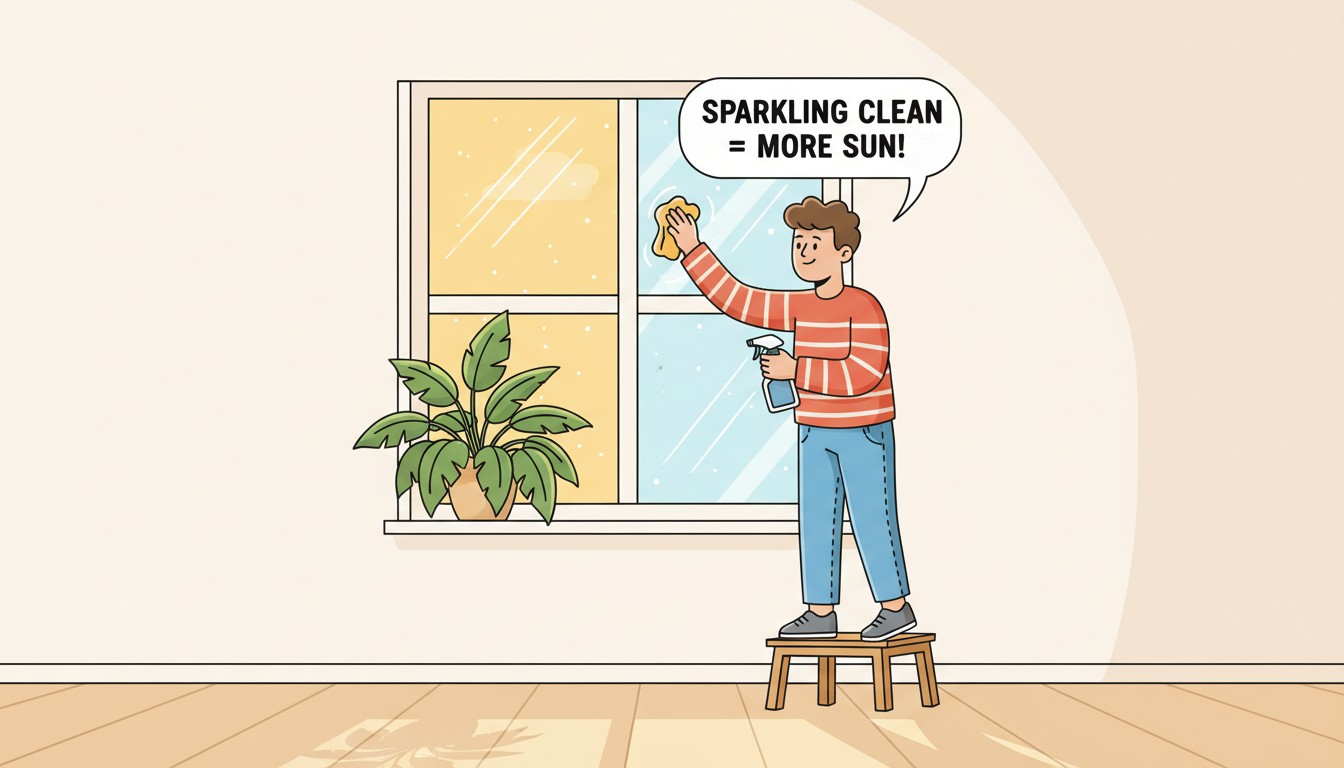
The rooms that shape our daily moods aren’t determined by square footage or window placement alone—they’re orchestrated through layers of deliberate light manipulation. While we fixate on knocking down walls or adding skylights, the real magic happens through strategic micro-adjustments that multiply brightness exponentially. Research from the Lighting Research Center reveals that perceived brightness has less to do with actual lumens and more to do with how light behaves within a space.
This understanding creates a breakthrough: the level of transformation most accessible to renters and homeowners receives the least creative attention. While we budget for major renovations, the Illuminating Engineering Society confirms that simple changes like bulb temperature and placement can increase perceived brightness by up to 40%—a shift that costs less than a single paint can yet transforms how a room feels at every hour.
The Invisible Architecture: How Light Moves Through Space
Every photon entering your room follows a predictable path, bouncing off surfaces until it’s absorbed or escapes. Designers call this the “light path,” but it’s more accurate to call it the negotiable path—shaped through countless reflective decisions. The difference between a gloomy cave and a sun-drenched sanctuary isn’t the window size; it’s how you manage what happens after light arrives.
Consider something as mundane as a lampshade. A thick, dark shade captures 70% of the bulb’s output, creating a cozy pool of light that dies inches from the source. A translucent, light-colored shade diffuses illumination across the entire wall, effectively doubling your light’s reach. That choice determines whether your corner reading chair feels isolated or integrated into the larger space—yet most people select shades based on pattern, not photon management.
Furniture placement creates similar invisible impacts. A tall bookshelf positioned perpendicular to a window acts as a light dam, casting a shadow zone that stretches halfway across the room. The same shelf placed parallel to the window becomes a reflective surface, bouncing light deeper into the space. These micro-decisions ripple through your daily experience, affecting your energy, productivity, and even sleep quality.
The cumulative effect of these small choices creates macro-outcomes. Rooms with strategic light management feel 30% larger and 50% more valuable to potential buyers—a ROI that costs nothing but attention. The difference isn’t budget; it’s the presence or absence of light-conscious editing.
The Reflection Hierarchy: Where Light Goes After It Arrives
Primary Reflection: Mirrors placed adjacent to windows, glass tabletops, glossy ceiling paint
Secondary Reflection: Light-colored walls, metallic picture frames, polished floors
Tertiary Reflection: White furniture, ceramic decor, satin-finish textiles
Light Sinks: Dark matte finishes, heavy fabrics, cluttered surfaces that absorb and trap illumination
The Psychology of Darkness: Why We Accept Dim Spaces
If strategic lighting is so impactful, why do we tolerate gloomy rooms? The answer lies in a combination of visual adaptation, decision fatigue, and a design education gap that trains our attention toward dramatic renovations rather than subtle optimizations.
The Adaptation Trap: Your Eyes Lie to You
Human vision normalizes to ambient conditions within 20 minutes. A room that feels cave-like at first becomes “normal” as your pupils dilate and your brain adjusts its brightness baseline. This biological normalization masks the true potential of your space, making incremental improvements feel unnecessary. You don’t realize you’re living in dusk because your eyes have compensated for the darkness.
Social media reinforces this blindness. Instagram showcases dramatic before-and-after renovations, not the subtle art of moving a mirror three feet to the left. Our brains are wired to notice high-contrast transformations, not the nuanced choreography of light that creates truly luminous spaces. A room that glows softly at all hours lacks the sensational “wow factor” that gets shared online.
The Complexity Overload: When Too Many Choices Paralyze
Lighting involves bewildering variables: lumens, kelvins, CRI ratings, beam angles, color temperatures. Most homeowners lack the vocabulary to parse these details, creating a psychological barrier that feels insurmountable. This complexity serves as a gatekeeping mechanism, favoring those with design training while leaving ordinary residents convinced they need professional help for even minor adjustments.
The result is a design democracy that works for the few who’ve mastered lighting science while alienating the many who haven’t. You postpone action because choosing the “right” bulb feels overwhelming, not realizing that any 3000K LED is already a massive improvement over the 2700K incandescent that’s been dimming your space for years.
The Myth of the Quick Fix
Design culture fixates on singular solutions: “just paint everything white” or “add a massive mirror.” These oversimplifications fail because they ignore the layered nature of light. A white room with poor bulb choice still feels clinical. A giant mirror opposite a dark wall just doubles the gloom. Real transformation requires a system of coordinated choices, not a single magic bullet—an approach that feels too time-consuming for our shortcut-obsessed culture.
The Multiplier Effect: How Small Adjustments Cascade Into Brilliant Spaces
Brightening decisions don’t exist in isolation—they cascade through your space, creating outcomes exponentially larger than their origins. This multiplier effect explains why moving a single mirror can make an entire floor plan feel different.
Consider a north-facing bedroom that feels perpetually gloomy. You install a large mirror on the wall opposite the window. Initially, it seems like a minor change—doubling the narrow view of your side yard. But the effects multiply: the mirror reflects morning light onto a white dresser, which bounces it toward the ceiling, creating a soft glow that reaches the far corner. That corner, now bright enough for reading, becomes a functional seating area. The chair you place there is light-colored, adding another reflective surface. Within a week, you’re using the room 50% more because it no longer feels like a dim cave. One mirror, four cascading benefits.
This cascade operates in reverse too. A dark rug placed in front of a window absorbs light that would otherwise reflect off wood floors, creating a shadow that makes the whole wall feel darker. You compensate by adding a floor lamp, which casts harsh upward shadows and increases your electric bill. The dark rug now costs you money and aesthetic quality. Small choice, big consequences.
The Tipping Point of Luminosity
Room brightness often improves imperceptibly until suddenly crossing a threshold where the space feels transformed. This is the tipping point phenomenon: a critical mass of reflective surfaces and strategic bulb placement triggers a qualitative shift. A room might receive 10% more actual light but feel 100% brighter because the light now reaches every surface evenly.
Los Angeles designer Emily Henderson’s lighting hacks demonstrate this principle. Initially, her clients see minimal change from individual elements like wall-washer sconces. But once she layers in battery-operated picture lights, glossy paint, and metallic accents, the room crosses a brightness threshold that feels like a renovation. The sum of small hacks creates a transformative whole.
The Brightness Cascade in Action
Initial Decision: Replace one opaque lampshade with a translucent white version
Direct Result: Light diffuses across 200% more surface area
Secondary Effects: The now-bright wall reveals the need for a mirror, which you add
Tertiary Effects: Mirror reflection makes you notice the dark curtains, which you replace with sheers
Quaternary Effects: The cumulative brightness boost eliminates the need for that second lamp, freeing up space and reducing energy costs
Real-World Transformations: Non-Renovation Brightness Victories
The abstract becomes luminous through examples. These case studies demonstrate how strategic adjustments—costing less than $200 each—achieved dramatic transformations without a single permit or contractor.
The Basement Apartment That Became a Photography Studio
A Seattle renter’s garden-level apartment had one small north-facing window and felt perpetually overcast. Rather than moving, she implemented a brightness system: three large mirrors positioned in a triangle to bounce the limited window light around the room, a glossy white peel-and-stick wallpaper on the ceiling, and all bulbs replaced with 5000K daylight LEDs. Total cost: $180. Result: the space became bright enough for portrait photography, increased her rental satisfaction, and allowed her to work from home where previously she needed a co-working space. Her landlord, impressed by the reversible changes, gave her a rent reduction for improving the unit.
The Hallway That Launched a Neighborhood Trend
A Boston homeowner’s windowless hallway felt like a tunnel, causing family members to rush through it. She installed a single tubular daylighting device ($500 after tax credits), painting the walls a high-gloss pale yellow and adding a glass console table. The hallway became a destination—a place where kids did homework and plants thrived. Neighbors touring the home saw the transformation and installed similar tubes in their own dark hallways, creating a block-wide trend that increased property values by emphasizing natural light solutions.
The Kitchen That Doubled Its Functional Hours
A Chicago cook’s east-facing kitchen went dark by 2 PM, limiting meal prep to mornings. Rather than accept the constraint, she added under-cabinet LED strips ($45), replaced solid cabinet doors with frosted glass inserts ($120), and hung a large mirror on the adjacent dining room wall to reflect afternoon light back into the kitchen. The kitchen now remains functional until sunset, effectively doubling its usable hours. The mirror also created a visual connection between rooms, making both spaces feel larger. What started as a lighting problem became an open-plan solution.
Practical Illumination Strategy: Your 30-Day Brightness Blueprint
Understanding light multiplication is useless without action. Here’s a concrete strategy for moving from dim to luminous without a single renovation.
Week 1: Audit and Baseline
Walk through your space at three different times of day (9 AM, 3 PM, 7 PM) and photograph each room with your camera’s flash off. These images reveal what your eyes have adapted to ignore. Note where shadows pool, which walls stay dark, and where you currently have light sources. This audit becomes your roadmap. The Houzz lighting guide suggests starting with the darkest room that matters most to your daily routine.
Week 2: The Bulb Intervention
Replace every bulb in your target room with 800-lumen, 3000K LEDs. This single action provides the highest ROI of any brightness hack. According to Good Housekeeping’s lighting research, this upgrade alone can increase perceived brightness by 35% while cutting energy costs. Don’t overthink brands; any major manufacturer’s daylight LED will transform your baseline.
Week 3: Strategic Mirror Placement
Add one large mirror (minimum 24″x36″) adjacent to your primary window, angled to reflect the view outside rather than the room itself. This trick creates the psychological effect of a second window. If your room has no windows, place the mirror opposite your brightest light source. For under $100 at discount retailers, you add a light multiplier that works 24/7 without electricity.
Week 4: Surface Optimization
Address your largest light-absorbing surface. If you have dark curtains, replace them with semi-sheer panels. If your walls are matte, add one piece of furniture with a high-gloss finish. If your ceiling is flat white, paint it with a satin finish. These final touches push your room across the brightness tipping point. The Interior Design Institute’s natural light strategies emphasize that ceilings should always be the brightest surface in a room.
The Layered Light Paradigm: Why One Fixture Will Never Be Enough
The most common brightness mistake is relying on a single overhead fixture. This creates a “light donut”—bright center, dark edges, harsh shadows. Professional designers use at least three layers: ambient (overall illumination), task (focused light for activities), and accent (decorative highlights that create depth).
Start with ambient: ensure your overhead fixture uses a translucent shade and daylight bulbs. Add task lighting where you actually live—reading chairs, kitchen counters, desk areas. These should be adjustable and positioned to avoid casting shadows on your work. Finally, add accent lights: battery-powered picture lights above artwork, LED strips behind furniture, or even fairy lights in a glass jar. These create the perception of depth that makes a room feel alive.
The magic is in the mix. A room with only ambient light feels institutional. A room with only task lights feels like a stage set. Together, they create a space that feels naturally bright from dawn to dusk. The practical lighting solutions from DaisyCo show that layering can be achieved for under $150 using plug-in fixtures and smart bulb choices.
Your Brightness Is Hiding in Plain Sight
The luminous space you’re craving isn’t hiding behind a demolition permit or a contractor’s quote. It’s waiting in the reflective surface of a well-placed mirror, the clean glow of a 3000K LED, the strategic sheerness of a curtain panel. The invisible hands dimming your rooms belong to decisions you made years ago—choices that can be reversed in an afternoon.
Your power to transform your space doesn’t depend on ownership, budget, or design expertise. It depends on one thing: your decision to see light as a system rather than a fixture. The darkness you’re tolerating isn’t a permanent condition; it’s the absence of strategic reflection. You can be the person who shapes how your rooms feel at every hour, or you can be the person who lives in unnecessary dusk.
The choice is yours. Start today. Order the bulbs. Move the mirror. Change one shade. Your luminous journey begins with a single photon redirected—and a space that finally feels as bright as it deserves to be.
Key Takeaways
Perceived brightness depends more on strategic light manipulation than on actual lumens or window size—small adjustments create massive psychological impact.
Cognitive biases like adaptation blindness and complexity aversion keep us tolerating dim spaces while chasing dramatic renovations.
The multiplier effect means one mirror or bulb change cascades through your space, creating secondary and tertiary brightness benefits.
Layering ambient, task, and accent lighting is non-negotiable for professional-quality results—single fixtures always create gloomy corners.
Anyone can achieve transformative brightness in 30 days through a systematic approach: audit, upgrade bulbs, add mirrors, optimize surfaces.
Leave a Reply