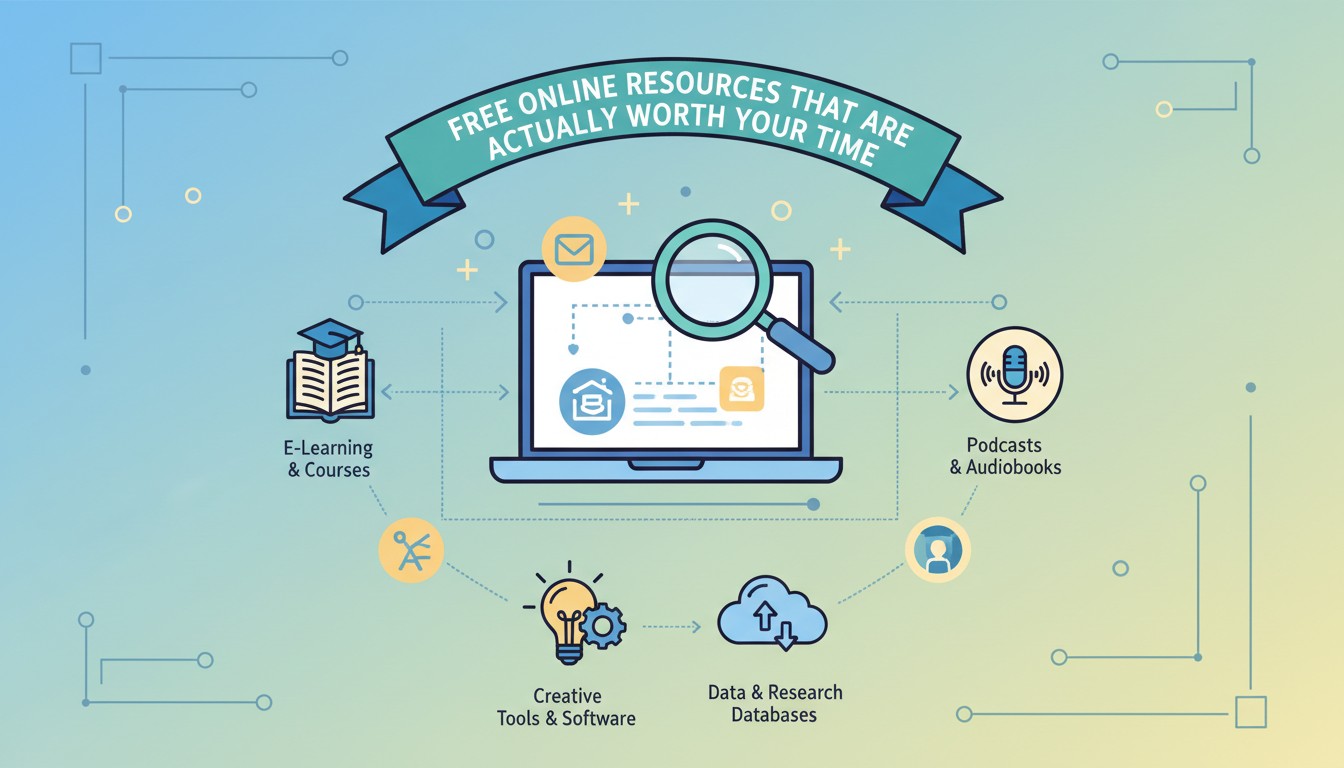
The democratization of online learning has created a paradox of choice. According to digital wellness research, the average learner spends 47 minutes daily searching for learning resources but only 23 minutes actually learning. We’ve become expert collectors of educational content and novice consumers of it. The platforms that genuinely deliver value—without paywalls, without upsells, without turning you into the product—are hidden in plain sight, drowned out by marketing noise.
This guide isn’t a listicle of every free site on the internet. It’s a rigorously curated collection of resources that have earned their place through one metric alone: they deliver transformation, not just information. These platforms are supported by universities, nonprofits, and companies with a vested interest in an educated public—not in extracting your credit card number.
The University-Grade Free Tier: When Ivies Become Open Source
The most valuable free resources come from institutions that have no profit motive. They’re funded by endowments, governments, or corporate social responsibility budgets, which means their incentives align with your learning—not your wallet.
Coursera’s Free Audit Model
Coursera partners with Stanford, Yale, and Princeton to offer courses taught by actual professors. While certificates cost money, the **audit option is entirely free**—you get full access to video lectures, readings, and often even discussion forums. As SafetyCulture’s 2025 platform analysis notes, Coursera’s strength lies in professional and academic courses designed for skill improvement and career transitions.
The “Learning How to Learn” course—available to audit for free—has changed how thousands approach studying. It teaches evidence-based techniques like spaced repetition and chunking that make learning feel less like torture and more like a skill you can master. That’s the hallmark of a worthwhile resource: it doesn’t just teach you *what* to learn; it teaches you *how*.
edX: The Ivy League Without the Tuition
If Coursera is the global classroom, edX is the Ivy League’s front door. Harvard, MIT, Oxford, Google, and Microsoft all offer free courses here. The platform is a nonprofit, which means there’s no “free trial” that morphs into a subscription. As educational experts confirm, you can audit most classes without paying a cent, gaining access to video lectures, readings, and even some assignments.
The computer science and philosophy courses are particularly robust—MIT’s Introduction to Computer Science uses Python and is considered the gold standard for self-taught programmers. The philosophy courses from Harvard explore logic and ethics with the same rigor as the on-campus versions. You’re not getting a watered-down experience; you’re getting the real curriculum, just without the credential.
MIT OpenCourseWare: The Purest Form of Free Education
MIT OCW has been around since the dawn of open-access education and remains the purest form of free learning. No signup, no login, no hidden fees. You get actual course content—lecture notes, assignments, exams—from one of the world’s most prestigious technical institutions. As Wabbithire’s 2025 platform guide notes, the content is advanced but perfect for college students or professionals seeking intensive study in science and engineering.
What makes OCW unique is its lack of gamification or progress tracking. It’s education stripped to its essence: here is the knowledge, here are the problems, go learn. This approach isn’t for everyone—you need self-discipline and a tolerance for academic rigor—but for those who thrive on pure content, it’s unparalleled.
The Interactive Learning Layer: Hands-On Free Resources
Passive video watching has limited retention. The platforms that combine instruction with immediate application create learning that sticks.
Khan Academy: The Patient Teacher Who Never Gets Tired
Khan Academy has remained free for over a decade through grants from foundations and corporations who believe in educational equity. As multiple educators confirm, its genius lies in making complex topics feel simple through short, clear videos and immediate practice exercises.
The math curriculum alone—from elementary arithmetic to calculus and linear algebra—is more comprehensive than most textbooks. The instant feedback system means you can’t move forward until you’ve mastered the concept, preventing the “I think I understand this” illusion that passive learning creates. It’s like having a tutor who never gets frustrated, never judges, and is available at 2 AM when you’re panicking about an exam.
Codecademy (Free Tier): Learn by Doing, Not Watching
Codecademy’s free tier teaches Python, HTML, CSS, and JavaScript through interactive coding windows. As coding education experts note, you see instant results, which provides the dopamine hit that keeps you hooked. The platform guides you through actual projects, offering immediate feedback on your code.
The free tier is genuinely valuable—not a crippled demo. You can complete the introductory courses and build functional websites or simple Python scripts without paying. The limitation is depth: advanced courses and real-world projects require the paid version. But by then, you’ll know whether coding is worth investing in.
Duolingo: Gamification That Actually Works
Duolingo turns language learning into a game, and despite the jokes about “the owl threatening your family,” its methodology is sound. As language learning research confirms, its spaced repetition system—reviewing words just as you’re about to forget them—is proven to boost long-term retention. The free version offers full access to lessons, vocabulary games, and streak tracking.
The limitation is that Duolingo won’t make you fluent. It will make you functional. You can handle basic conversations, read simple texts, and understand common phrases. That’s not a flaw—it’s exactly what a free tool should do. Fluency requires immersion, conversation with natives, and cultural context that an app can’t provide.
The Credential Layer: Free Learning That Boosts Your Résumé
Some free platforms offer certificates or digital badges that carry weight in the job market. These aren’t just participation trophies—they’re proof of completion from reputable organizations.
Google Digital Garage: Career-Focused Digital Skills
Google’s Digital Garage offers free courses on digital marketing, data analysis, and productivity tools. As career development experts note, the “Fundamentals of Digital Marketing” course includes a free certificate from Google—a credential that looks impressive on LinkedIn and résumés. The content is practical, teaching you how to navigate the modern digital landscape smarter.
The courses are designed for immediate application. You can take a lesson in the morning and implement it at work in the afternoon. This practical focus makes the learning stick and justifies the time investment.
OpenLearn by The Open University: Academic Credibility, Zero Cost
OpenLearn offers over 1,000 free courses from The Open University, a respected UK institution. As educational platform reviews confirm, you can earn free digital badges or statements of participation. These provide tangible proof of completion, which appeals to serious learners who want recognition without tuition fees.
The content is well-structured and self-paced, covering everything from health and psychology to law and mathematics. The academic rigor is evident—this isn’t dumbed-down content; it’s actual Open University material made freely available.
Alison: Career-Focused Diplomas
Alison offers free online diplomas and certificates in business, technology, and languages. As career-focused platforms highlight, the courses are designed for immediate workplace application. The project management course, for example, teaches frameworks you can implement immediately at work.
The diploma isn’t equivalent to a university degree, but it demonstrates initiative and practical knowledge—qualities many employers value more than formal credentials in rapidly changing fields.
The Meta-Learning Layer: Free Resources That Teach You How to Learn
The most valuable free resources aren’t subject-specific—they’re meta-skills that amplify every other learning effort.
TED-Ed: The Spark of Curiosity
Sometimes you don’t need a full course—just a spark to ignite curiosity. TED-Ed’s short, animated videos explain complex ideas simply. As one learner reflected, a video on procrastination “hit me right in the gut” by explaining *why* we delay and how to fix it. That single 5-minute video can be more valuable than a 10-hour productivity course.
The trick is curating your subscriptions. Follow channels like CrashCourse for academics, Kurzgesagt for science, or freeCodeCamp for coding. Once you build a feed of quality, YouTube becomes your personalized university.
FutureLearn: The Conversation Classroom
FutureLearn, a UK-based platform, offers short courses from universities and cultural institutions. What distinguishes it is the sense of community—you can discuss ideas with other learners, share thoughts, and get feedback. As one learner noted, “the comment section was just as educational as the lessons” in a psychology course. This interaction transforms solitary learning into collaborative discovery.
The courses are often available free for a limited time, giving you enough structure to complete them without endless access that leads to procrastination.
The Evaluation Framework: How to Spot Worthwhile Free Resources
Not every free resource is worth your time. Use this framework to evaluate before committing:
The Three-Signal Test
Source Signal: Is it backed by a university, nonprofit, or company with a clear educational mission? Avoid sites covered in ads or affiliate links.
Content Signal: Can you preview the material? Are the instructors credentialed? Does the curriculum build logically or is it just random videos?
Community Signal: Are there discussion forums, user reviews, or external validation? A resource worth your time has a community of learners who can vouch for its quality.
The “Free Trial” Trap
Beware of platforms that offer “free trials” requiring credit card information. True free resources don’t need your payment details. They’re funded by grants, endowments, or corporate social responsibility budgets. If a site asks for your card “just in case,” it’s not free—it’s a sales funnel.
“The internet is full of learning tools, but not all are free or trustworthy. The best free educational platforms offer quality, ease of use, and access to expert knowledge without charging a fee. They help build skills, support school learning, or guide a career change, all at zero cost.” — Wabbithire Educational Platform Analysis
Maximizing Free Resources: The Strategy Layer
Having access to great free resources isn’t enough. You need a strategy to avoid the “collector’s fallacy”—bookmarking without learning.
The One-Course Rule
Commit to finishing one free course before starting another. This prevents the infinite “saved for later” list that never gets consumed. Choose based on immediate need, not aspirational interest. If you’re struggling with productivity, take the “Learning How to Learn” course now, not the philosophy course that sounds interesting but has no urgency.
The Certificate Checklist
If you’re learning for career advancement, create a “free certificate checklist” on your résumé. List skills you want to demonstrate, then find free courses that offer certificates. Google Digital Garage for marketing, Alison for project management, Codecademy for coding basics. Each completed certificate becomes a bullet point, proving initiative and up-to-date skills.
The 15-Minute Daily Habit
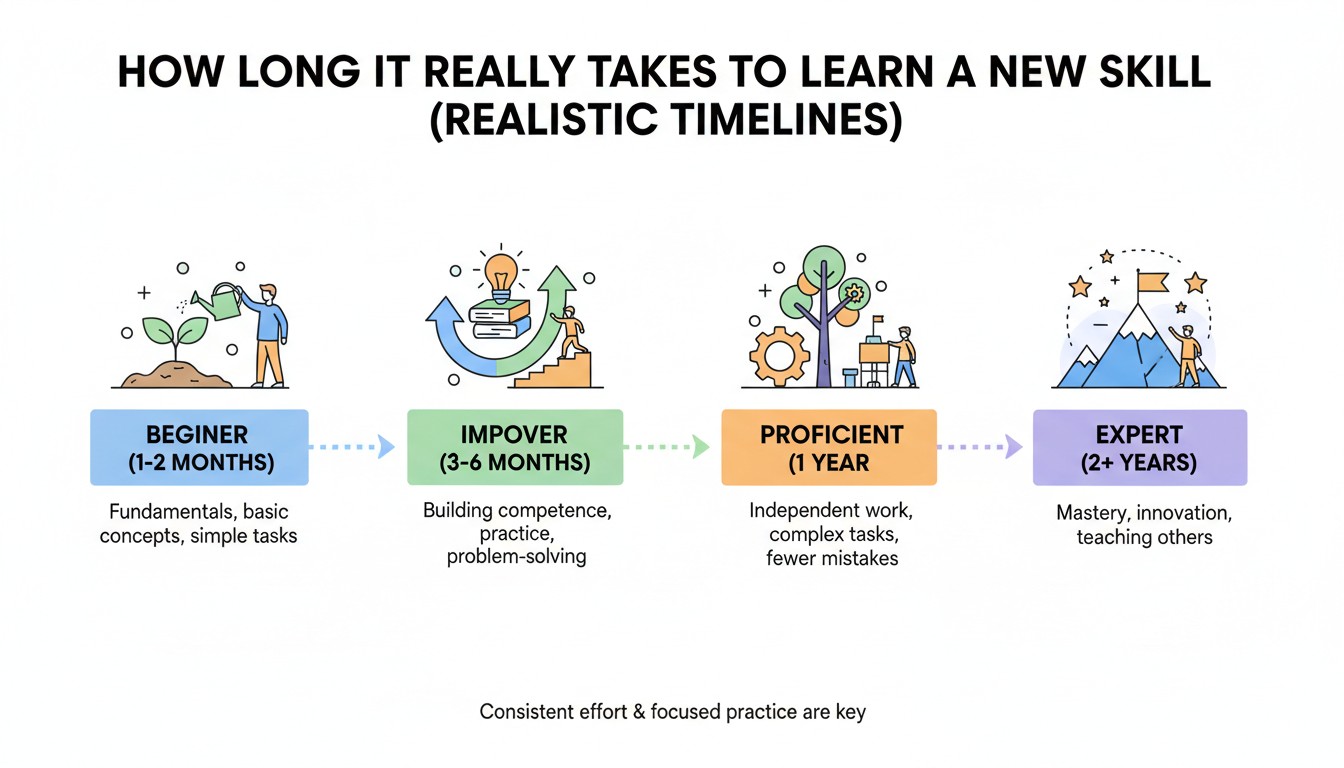
Don’t try to binge-learn. Commit to 15 minutes daily on one platform. This builds the habit without overwhelming your schedule. Over a year, that’s 91 hours—enough for competence in most moderately complex skills. The consistency matters more than intensity.
The Only Resource You Need is Attention
Every platform listed here is free. Not “free trial” free. Not “free with ads” free. Actually, completely, no-credit-card-required free. They’ve been vetted by millions of learners, backed by institutions that care about education, and proven to transform beginners into competent practitioners.
But the resource that determines success isn’t on this list. It’s your attention. Your willingness to sit with one course for 20 hours. Your discipline to practice daily. Your courage to admit you don’t understand and rewind the video.
Choose one platform. One course. One skill. Start today. The knowledge is free. The only thing it costs is the time you’re already spending scrolling. Spend it learning instead.
Key Takeaways
Free educational resources from Coursera, edX, Khan Academy, and MIT OCW offer university-grade content without cost, funded by endowments and corporate grants rather than subscriptions.
Interactive platforms like Codecademy (free tier) and Duolingo use immediate feedback and gamification to create engagement that passive video watching cannot match.
Credentials from Google Digital Garage, Alison, and OpenLearn provide résumé-worthy proof of skills without tuition fees, focusing on practical workplace applications.
Evaluate free resources using the Three-Signal Test: source credibility, content quality, and community validation; avoid “free trials” requiring credit cards.
Maximize free learning through strategies like the One-Course Rule, the 15-Minute Daily Habit, and targeted certificate collection—attention is the true limiting resource.