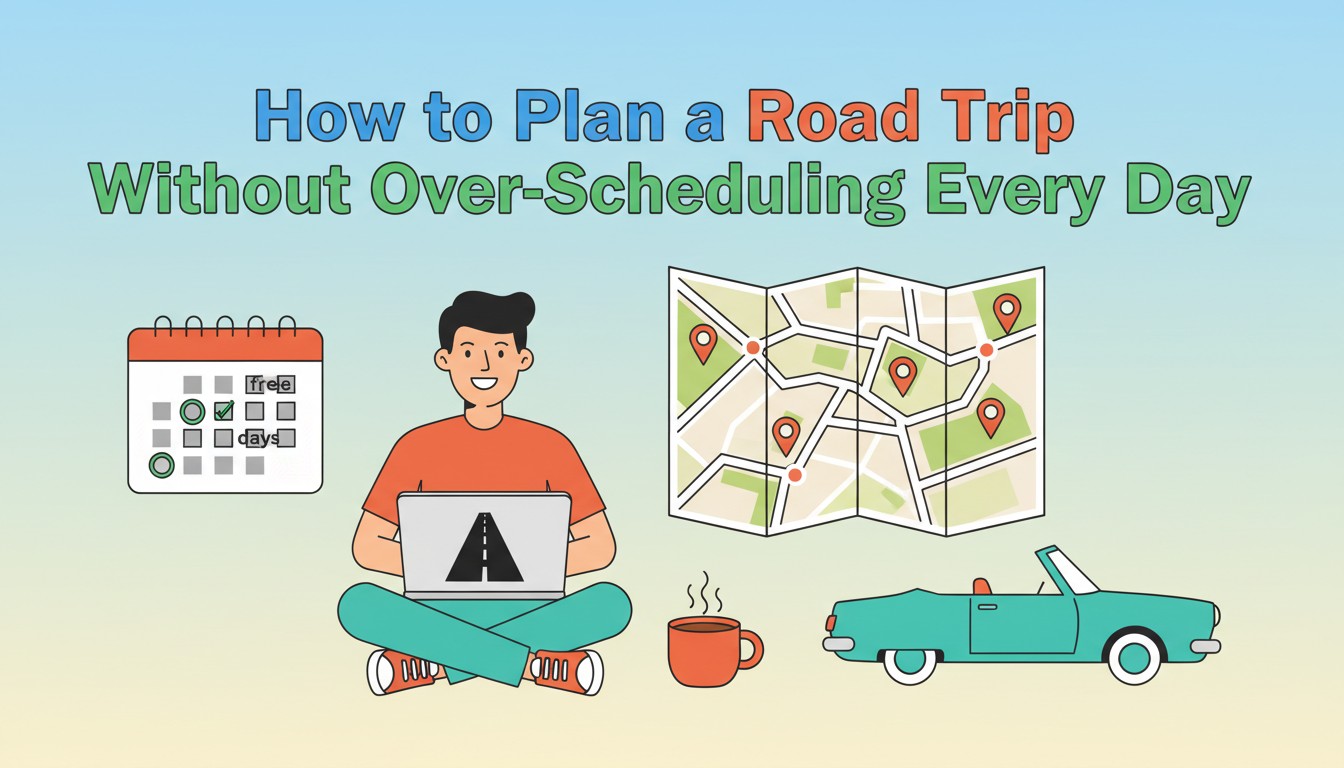
The tyranny of the perfectly planned road trip has reached its breaking point. We’ve become so adept at optimizing routes, pre-booking attractions, and maximizing mileage that we’ve engineered the discovery right out of discovery. The science of surprise tells us what our grandparents already knew: the best travel memories are the ones you couldn’t have planned. Yet we continue to sacrifice serendipity at the altar of efficiency, treating the open road like a supply chain to be managed rather than a mystery to be lived.
The Illusion of Control: Why We Schedule Ourselves Into Misery
There’s a peculiar anxiety that drives over-planning. It’s the fear that without a spreadsheet, we’ll somehow waste the experience. This ignores a fundamental truth: on the road, waste is often the point. The hour you “lose” poking around a junkyard art installation outside Marfa is precisely the hour that makes the trip yours rather than TripAdvisor’s.
The problem compounds with every layer of reservation. Each booked hotel becomes a waypoint you must reach, regardless of how compelling the detour. That restaurant reservation three states away transforms from a meal into an obligation. Before you know it, your vacation has more deadlines than your job, and you’re checking your watch more than the scenery.
The Mileage Mirage
We’ve all done the math: 600 miles divided by 70 mph equals 8.6 hours. Perfectly doable, we tell ourselves, forgetting that this calculation exists only in a frictionless vacuum where humans never need to pee, eat, or simply stand in awe. The reality, as any long-haul driver knows, is that sustained highway speed creates a unique form of exhaustion that compounds faster than you’d expect.
A more honest formula: every four hours of driving requires one hour of not-driving. This isn’t weakness—it’s biology. Your eyes need distance variation. Your spine needs realignment. Your brain needs novelty. The cross-country veterans who’ve logged real miles understand that 200 miles on blue highways takes five hours, not three, and those extra two hours aren’t lost—they’re invested in staying human.
Building a Framework, Not a Prison
The alternative to over-scheduling isn’t chaos—it’s intentional flexibility. Think of your itinerary as a trellis rather than a cage: it provides structure for growth without dictating every twig. The goal is to create a system that supports discovery rather than preventing it.
The Rule of Three Anchors
For any week of travel, permit yourself only three fixed points: one major destination, one time-sensitive reservation, and one can’t-miss experience. Everything else lives in a realm of possibility. This constraint forces clarity: is that museum really essential, or are you just afraid of empty space?
The couple who spent three days in Miravet, Spain, had no anchors at all—which can be its own brand of stressful. Better to have a loose skeleton that you can flesh out with spontaneity than to drift aimlessly or grip the wheel white-knuckled to your next reservation.
The 70/30 Booking Principle
Here’s the sweet spot: pre-book 70% of your accommodations, but ensure they’re fully refundable. Leave the remaining 30% completely open. This hybrid approach, championed by travel strategists, gives you security without shackles. When you discover that small-town rodeo or hear about a hot spring from a fellow traveler, you have the freedom to stay.
For the truly adventurous, consider base camping: book a single location for 3-4 nights and radiate out on day trips. Your luggage stays put, your stress level drops, and you can dive deep into one region instead of skimming across many.
“The beauty of a road trip is to allow time for those random ‘pull over now’ moments that happen when you see something cool out of nowhere!” — Experienced road tripper Michelle from Live Like It’s the Weekend
Digital Tools: Your Co-Pilot, Not Your Commander
Technology can be a tool for flexibility or a tyrant of rigidity. The difference lies in how you wield it. Rather than using apps to lock in every detail, employ them as repositories of possibility—rainy day options, scenic detours, and hungry-at-midnight solutions.
Google My Maps: The Canvas of Curiosity
Create a map layered with potential: green pins for scenic pullouts, blue for swimming holes, orange for diners recommended by locals. Each morning, cast your eyes over the cluster near your general direction and pick a few that feel right today. This visual approach transforms planning from obligation to artistry.
The Art of the Incomplete Itinerary
Purposefully leave gaps. A blank half-day with a notation like “explore 50-mile radius from camp” isn’t lazy planning—it’s strategic ambiguity. Some of the best meals and most memorable conversations happen when you ask a local, “What’s good around here?” and follow their directions without checking reviews first.
Biology of the Road: Working With Your Natural Rhythms
Your body operates on ultradian cycles—90 to 120-minute waves of alertness followed by dips. Fight this rhythm and you’ll find yourself in the dangerous territory of highway hypnosis, where miles pass unremembered and reaction times slow to a crawl. Work with it, and you’ll discover a sustainable cadence that makes long days feel effortless.
The Two-Hour Pulse
The research is unambiguous: stopping every two hours for just 15 minutes dramatically improves alertness and mood. But here’s what the safety studies miss—those stops are where the trip actually happens. The conversation with the tire shop owner about the local rodeo. The discovery of homemade pie at a dusty crossroads. The herd of elk spotted from a scenic overlook you’d have blown past.
Make the stops mandatory and the activities within them optional. Pull over, stretch, walk around. If something catches your eye, investigate. If not, you’ve still reset your biological clock and prevented the fatigue that makes over-scheduling feel necessary.
Seasonal Intelligence
The calendar is your first planning tool, and it’s refreshingly inflexible. Late May and mid-September emerge as the sweet spots for cross-country travel—not quite peak season, not yet snowed in. The weather window is wide enough for spontaneity while narrow enough to avoid crowds.
If you’re locked into summer by school schedules, shift your weekly rhythm. Travel Tuesday through Thursday, using weekends as anchors in interesting places. The roads are emptier, the hotels cheaper, and the locals more relaxed without weekend tourist swarms.
Safety Without Shackles: Smart Preparedness
Fear drives rigidity. The nightmare of “what if” keeps us tethered to over-planned safety. But genuine security comes not from reservations, but from capability—the confidence that you can handle whatever emerges.
The Rolling Command Center
A well-equipped vehicle isn’t just about roadside emergencies—it’s about psychological freedom. When you know you have a headlamp, tire repair kit, first aid supplies, and paper maps (yes, physical maps), you can embrace uncertainty without anxiety. The essentials checklist isn’t a burden; it’s a liberation tool.
The Get-Unstuck Stash
Keep a separate $200-300 contingency fund—not for emergencies, but for opportunities. That unexpected festival where every hotel is booked becomes manageable when you can afford the last room an hour away. The blown tire becomes an adventure when you can buy a replacement on your timeline, not the cheapest option’s.
The Flexible Traveler’s Mantra
“We have a direction, not a destination. We have intentions, not obligations. We are prepared for anything, attached to nothing.”
Living Examples: When Flexibility Paid Dividends
Consider the father and son who tackled Utah’s “Mighty Five” national parks during spring break without a single campsite reservation. Conventional wisdom screamed disaster. Their strategy? Enter each park by 10 AM, stay until 4 PM, then exit to nearby BLM land for free dispersed camping. Not only did they succeed, but one evening a fellow camper invited them to a traditional kava ceremony—an encounter no reservation system could orchestrate.
Or the train travelers who left Barcelona with Eurail passes but no destination. When the conductor demanded a stop, they asked their entire carriage for suggestions. The result: three days in Miravet, a village with no train station, staying in a Moorish fortress-turned-hacienda, exploring vineyards and swimming in the Ebro River. As the traveler later wrote, “We couldn’t have found a better place with all the planning in the world.”
These aren’t flukes. They’re what happens when you build systems that welcome the unexpected rather than fortifying against it.
Your First Steps Into Flexible Travel
You don’t need to transform your entire approach overnight. Start small. For your next weekend trip, book only the first and last nights. Leave Saturday completely open. See how it feels to wake up and ask, “What do we feel like today?” rather than consulting a printed schedule.
Try the 2-hour pulse method on your next long drive. Set a timer. Stop regardless of progress. Notice how the journey changes when you’re not racing against an internal clock. Pay attention to what you discover when you’re not too tired to care.
Build a Google Map of your dream route—not as a battle plan, but as a bucket list. Save every oddball museum, scenic overlook, and local recommendation. Then, when you actually hit the road, use it as a suggestion box, not a to-do list. The satisfaction of checking off a planned stop pales compared to the joy of stumbling upon something you didn’t know you were looking for.
The Road Rewards the Present
The asphalt beneath your wheels isn’t a timeline to be conquered. It’s a ribbon of possibility that unspools differently for every traveler willing to loosen their grip on certainty. Every mile marker holds a choice: hurry past or pause and see.
Your over-scheduled itinerary isn’t protecting you from disaster—it’s insulating you from discovery. The moments you’ll remember five years from now aren’t the ones you planned with military precision. They’re the ones that caught you off guard, that forced you to change course, that reminded you why you left home in the first place.
Pack a map, not a mandate. Bring a sense of direction, not a set of orders. The world beyond your windshield is bigger than your plans for it. Let it surprise you. Let it change you. That’s what the open road has always offered, and it’s still there waiting—if you’re brave enough to leave space for it.
Leave a Reply